

I’m Not Addicted… I Just Need It
The Lie We Tell Ourselves
No one wakes up and says, “I want to become addicted.”
Addiction doesn’t begin with collapse. It begins with justification.
“I’m stressed.”
“It helps me sleep.”
“I work hard.”
“Everyone does it.”
“I can stop anytime.”
The most dangerous phase of addiction is not excess. It’s denial.
And denial doesn’t look dramatic. It looks functional.
If you’ve ever said, “I’m not addicted… I just need it sometimes,” this blog is for you.
This pattern is deeply connected to addiction and denial psychology, where the mind protects itself from uncomfortable truths by reframing harmful behaviours as harmless habits.
What Is Denial In Addiction?
Denial is not stupidity. It’s protection.
The brain resists labeling something as addiction because that label threatens identity.
“I’m successful.”
“I’m disciplined.”
“I’m in control.”
Addiction feels like it contradicts those beliefs.
So the mind creates softer language:
- Habit
- Routine
- Stress relief
- Reward
- Break
- Phase
Denial allows behaviour to continue without identity disruption.
But the behaviour still rewires the brain.
This mechanism is widely explained in addiction psychology, where cognitive defense systems help individuals justify patterns that may already be forming dependency.
How Addiction Quietly Builds
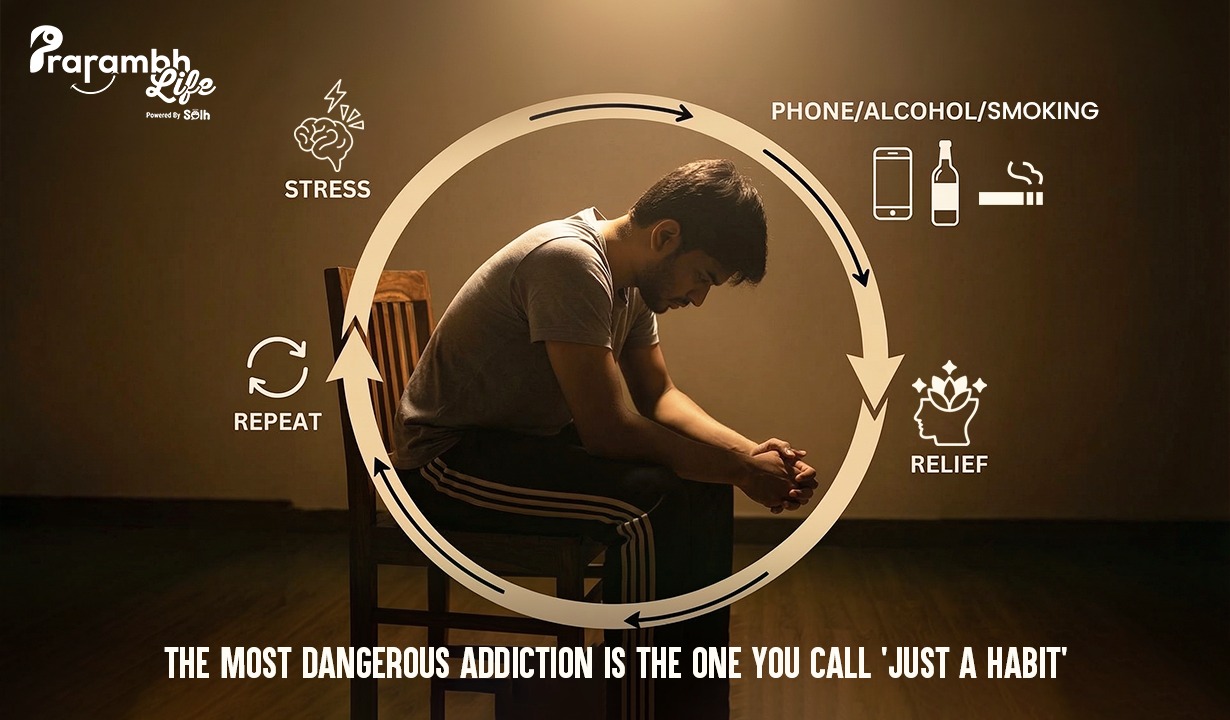
Addiction rarely starts with intensity. It starts with relief.
Let’s break this down.
Step 1: Emotional Discomfort
Stress. Loneliness. Boredom. Anxiety. Pressure.
Understanding how stress leads to addiction often begins here — when emotional discomfort pushes the brain to search for quick relief.
Step 2: Temporary Relief
Alcohol. Nicotine. Scrolling. Porn. Sugar. Gambling. Shopping.
Step 3: Brain Registers Reward
Dopamine rises. Stress drops temporarily.
Step 4: Brain Remembers Shortcut
Next time discomfort appears, the brain suggests the same behaviour.
Over time:
- Relief becomes reliance
- Reliance becomes routine
- Routine becomes dependency
- Dependency becomes addiction
And through all of it, the person says: “I’m fine.”
What Are Early Signs Of Addiction Most People Ignore?
You don’t have to hit rock bottom to have a problem.
In fact, many early signs of addiction appear long before life begins to fall apart.
Here are subtle signs:
- You think about the behaviour before doing it.
- You plan your day around it.
- You feel restless without it.
- You struggle to stop once you start.
- You hide how much you consume.
- You minimize when questioned.
- You feel slightly guilty after.
- You’ve tried cutting down but failed.
These patterns are often among the early symptoms of addiction, even when life still appears normal on the surface.
If 3 or more resonate — that’s not casual use. That’s early dependency.
“I Can Stop Anytime” — Can You?
This is the most common sentence.
But here’s the test:
Try stopping for 30 days.
If you experience:
- Irritability
- Cravings
- Mood swings
- Restlessness
- Sleep disturbance
- Anxiety
Your brain has already adapted.
Addiction isn’t about how often you use.
It’s about how your nervous system reacts when you don’t.
High-Functioning Addiction: The Hidden Category
Many people assume addiction equals dysfunction.
But there’s a growing group called high-functioning addicts.
They:
- Have jobs
- Pay bills
- Show up socially
- Seem productive
- Appear stable
But internally:
- They rely heavily on substances or behaviours to regulate emotions.
- They cannot unwind naturally.
- They feel uneasy without stimulation.
- They use performance as camouflage.
This group rarely seeks help — because nothing looks “broken.”
Yet dependency deepens.
Why Denial Feels Safer Than Awareness
Awareness requires change.
Change requires discomfort.
Denial protects comfort.
But here’s the paradox:
Short-term comfort creates long-term instability.
When denial continues:
- Tolerance increases
- Quantity increases
- Emotional coping weakens
- Natural dopamine decreases
- Cravings intensify
The brain slowly reduces its ability to feel pleasure naturally.
That’s when “I enjoy it” turns into “I need it.”
The Dopamine Trap
Addiction hijacks dopamine.
Normally dopamine rises with:
- Achievement
- Exercise
- Social bonding
- Creativity
- Learning
But addictive behaviours spike dopamine unnaturally high.
Over time:
- Baseline dopamine drops
- Natural pleasures feel dull
- Motivation decreases
- You seek stronger stimulation
This is why:
- One drink becomes three
- 10 minutes scrolling becomes two hours
- One bet becomes repeated bets
- Occasional porn becomes compulsive viewing
The brain adjusts upward.
And denial continues.
Why Willpower Alone Fails
Many people try:
- “I’ll control it.”
- “I’ll reduce slowly.”
- “I’ll only do weekends.”
- “I’ll set limits.”
But addiction is not a discipline issue.
It’s a rewired reward system.
Without:
- Trigger awareness
- Behaviour mapping
- Emotional regulation skills
- Structured support
- Dopamine recalibration
Willpower fades. Especially during stress.
Final Question
If someone else had your pattern, would you call it addiction?
Or would you see the warning signs clearly?
Sometimes clarity is easier when we step outside ourselves.
You don’t need to wait for collapse to qualify for help.
Addiction doesn’t announce itself loudly.
It whispers: “I just need it.”
Listen carefully.
Because sometimes, what we call “need” is actually dependency wearing a polite disguise.
And the earlier you interrupt the pattern, the easier recovery becomes.


