

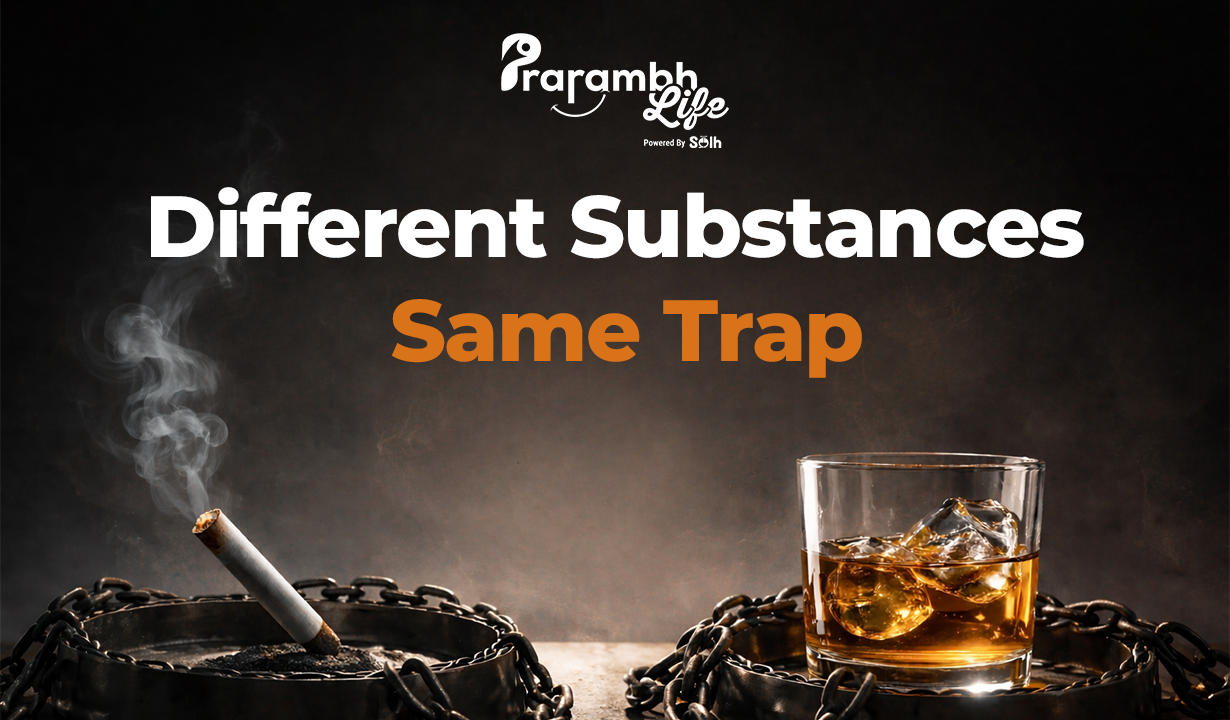
Quitting smoking and quitting drinking are both difficult—but for different reasons. Smoking creates strong physical dependence on nicotine, while drinking builds deeper psychological and social dependence. For many people facing addiction quitting difficulty, which one is harder to quit depends on how addiction develops, how often it’s triggered, and how to quit addiction without relapse through the right recovery approach.
Why This Question Even Matters
“Smoking chhodna zyada mushkil hai ya drinking?” Yeh sirf curiosity ka sawal nahi hai. Yeh sawaal tab aata hai jab:
- Multiple quit attempts fail ho chuke hote hain
- Relapse baar-baar ho raha hota hai
- Guilt aur confusion badhne lagti hai
- Addiction recovery struggle real lagne lagta hai
Truth yeh hai: Both are hard—but not in the same way. And yahi wajah hai ki quitting addiction is hard without understanding the root cause.
Smoking Addiction: Why Cigarettes Are Hard to Quit
Smoking addiction is primarily a substance addiction driven by nicotine. For many people, smoking becomes the hardest addiction to quit because the body adapts quickly to nicotine.
What makes smoking difficult to quit:
- Nicotine dependence creates physical withdrawal
- Brain nicotine ke bina “normal” feel nahi karta
- Smoking becomes a stress-response habit
- Cravings are frequent and predictable
Common smoking withdrawal symptoms:
- Irritability
- Restlessness
- Headaches
- Sleep disturbance
- Intense cravings
This is why smoking is often described as physically harder to quit and a major contributor to addiction quitting difficulty.
Drinking Addiction: Why Alcohol Is Harder Than It Looks
Alcohol addiction works differently. It is less about constant physical craving and more about emotional, social, and psychological dependence—which makes why people relapse after quitting alcohol so common.
What makes drinking difficult to quit:
- Alcohol is socially acceptable
- Drinking is linked to celebration, stress relief, bonding
- Triggers are emotional, not fixed
- Relapse often happens “accidentally”
- Many people don’t even realise when social drinking quietly becomes dependency
That’s why drinking is often psychologically harder to quit and leads to a deeper addiction recovery struggle.
Smoking vs Drinking: Side-by-Side Reality Check
- Aspect
- Smoking
- Drinking
- Addiction type: Substance addiction | Substance + behavioral patterns
- Physical withdrawal: Strong | Mild to moderate (varies)
- Social pressure: Decreasing | Very high
- Relapse triggers: Predictable | Emotional & situational
- Hidden dependency: Lower | Much higher
Conclusion: Smoking attacks the body faster. Drinking embeds itself deeper into daily life—often becoming the hardest addiction to quit emotionally.
So… Which One Is Harder to Quit?
The honest answer: The one you use to cope.
- If you smoke to handle stress → smoking is harder.
- If you drink to relax, socialise, or escape → drinking is harder.
Addiction is not about the substance alone. It’s about what role it plays in your life—and that’s where most addiction quitting difficulty begins.
Why Willpower Alone Fails for Both
People fail not because they’re weak—but because:
- Stress is unmanaged
- Triggers are unexamined
- Relapse prevention is missing
This is exactly why people relapse after quitting, even after strong motivation. Quitting without structure turns recovery into a daily fight. And fights don’t last forever—especially when quitting addiction is hard without support.
Facts You Should Know
- Nicotine reaches the brain within 10 seconds
- Alcohol relapse rates are highest during stress periods
- Most people relapse not due to craving, but emotion
- Structured recovery lowers relapse risk significantly
- Addiction recovery improves when stress is regulated early—key to how to quit addiction without relapse
Recovery & Solution: Why Prarambh Life Works for Both
Whether it’s smoking or drinking, recovery only works when:
- Addiction type is identified correctly
- Stress is addressed, not ignored
- Relapse is prevented—not punished
This approach directly reduces addiction recovery struggle and helps people learn how to quit addiction without relapse. This is where Prarambh Life comes in.
3-Month Substance Deaddiction Program
Ideal for:
- Early-stage smoking or drinking addiction
- Stress-based or habitual use
- First-time quit attempts facing addiction quitting difficulty
What this program includes:
- Personalized recovery plan
- Craving and trigger management
- Stress regulation tools
- Expert guidance
- Early relapse prevention
Goal: Stabilise dependence and prevent escalation.
6-Month Substance Deaddiction Program
Ideal for:
- Long-term smoking or alcohol use
- Multiple failed quit attempts
- Strong emotional reliance
- Ongoing addiction recovery struggle
What this program includes:
- Deep trigger and habit correction
- Emotional coping skill development
- Lifestyle restructuring
- Long-term relapse prevention
- Ongoing expert and peer support
Goal: Sustainable recovery—not temporary quitting.
FAQ
Q1. Is it harder to quit smoking or drinking?
It depends on the role the substance plays. Smoking is physically harder; drinking is psychologically harder and often linked to why people relapse after quitting.
Q2. Why do people relapse after quitting successfully?
Because stress and emotional triggers were never addressed—one of the biggest reasons quitting addiction is hard.
Q3. Can recovery happen online?
Yes. Structured, confidential online recovery is effective and sustainable for reducing addiction recovery struggle.
Q4. Is quitting without help possible?
Possible, but relapse risk is much higher without structure—especially if you don’t know how to quit addiction without relapse.
Final Insight
Quitting isn’t about choosing between smoking or drinking. It’s about understanding why you need it in the first place. When recovery focuses on stress, habits, and relapse—not shame—real change finally sticks. And that’s exactly what Prarambh Life is built for.


