

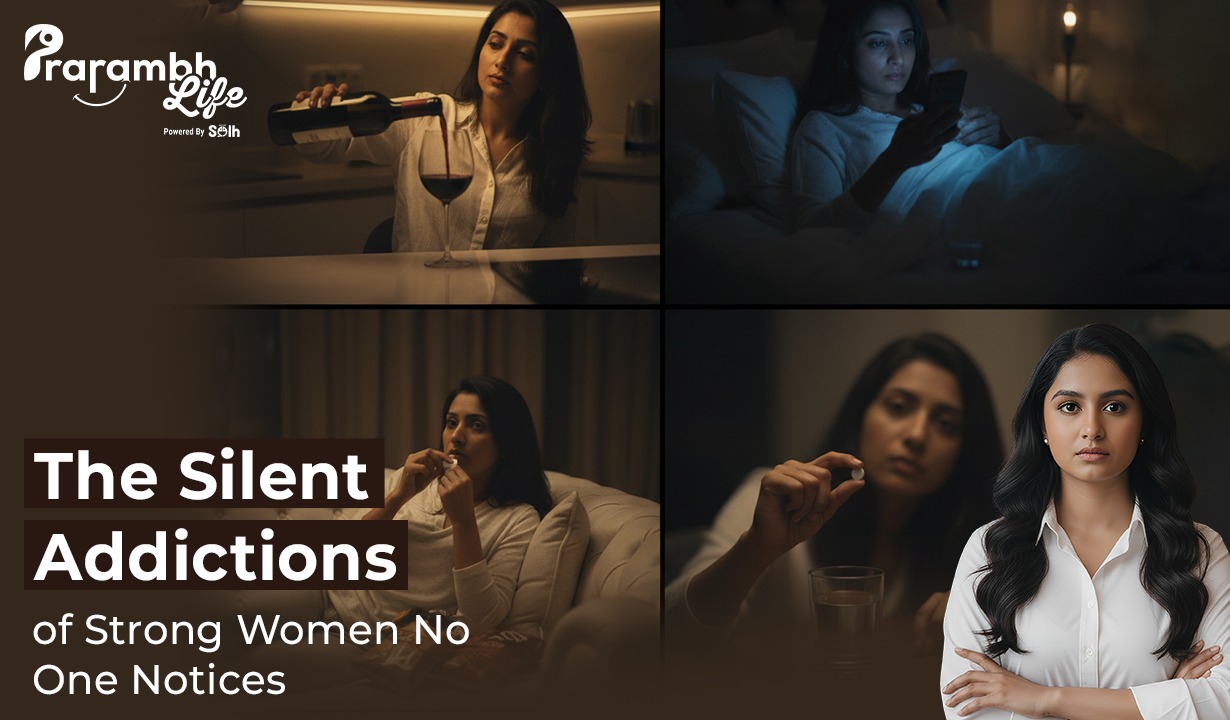
The Silent Addictions of Strong Women
The Coping Patterns Nobody Sees
She shows up.
She handles work.
She manages family.
She meets deadlines.
She looks composed.
She does not collapse publicly.
But she copes privately.
And sometimes, that coping turns into addiction.
Not the dramatic kind.
The invisible kind.
This Women’s Day, let’s talk about the silent addiction in women — the patterns that don’t look like addiction… until they are.
Do Women Experience Addiction Differently?
Yes.
- Develop dependence faster
- Hide usage more carefully
- Internalize shame more deeply
- Seek help later
- Use substances for emotional regulation
Men externalize stress.
Women internalize it.
And internalized stress needs an outlet.
- Emotional eating addiction in women
- Alcohol at night
- Prescription sedatives
- Social media addiction in women
- Overworking
- Online shopping
- Emotional dependency
Because women don’t fall apart loudly.
They adapt.
Until adaptation becomes reliance.
Why Strong Women Are More Vulnerable To Hidden Addiction In Women
Strength can be a mask.
When you are “the responsible one,” there’s little room to unravel.
So you self-soothe quietly.
Addiction often starts as emotional coping mechanisms in women.
Not recklessness.
Emotional Eating: The Most Normalised Addiction
If food becomes your primary emotional regulator, it can be dependency.
- You eat when stressed
- You crave sugar when overwhelmed
- You feel relief, then guilt
- You promise to restart tomorrow
This is not about weight.
It’s about regulation.
The cycle repeats.
“Wine O’Clock” Culture: When Normalisation Becomes Risk
One glass becomes two.
Two becomes routine.
Routine becomes necessity.
Women often drink to reduce anxiety.
But alcohol increases anxiety over time.
The cycle strengthens.
Prescription Pill Dependency: The Polite Addiction
- Sleeping pills
- Anti-anxiety medication
- Painkillers
When usage extends beyond need, dependency forms.
Dependency is dependency.
Social Media Validation: The Dopamine Loop
Scrolling provides dopamine, validation, and escape.
But also increases comparison, anxiety, and self-doubt.
If your mood depends on it, it may be your regulator.
If your mood fluctuates based on online response, the platform may have become your regulator. This is often driven by a dopamine-driven social media addiction cycle.
The Addiction To Being Needed
Some women are addicted to being indispensable.
- Overgive
- Overperform
- Avoid rest
Productivity becomes their dopamine.
This is high functioning addiction in women.
Why Women Hide Addiction Better
- Secret wine refills
- Hidden snacking
- Late-night scrolling
- Silent pill use
They continue functioning.
But the internal cost rises.
The Shame Barrier
So instead of seeking help, they compensate harder.
In many cases, shame keeps addiction hidden and delays recovery.
“I should handle this.”
“I’m supposed to be strong.”
Exhaustion increases reliance.
Reliance becomes dependency.
Is It Addiction Or Just Coping?
Coping is occasional and flexible.
Addiction is compulsive and repeated.
If it’s your primary outlet, it may be addiction.
Why Women’s Addiction Escalates Faster
- Hormones amplify reward response
- Stress sensitivity is higher
- Internalized stress increases intensity
Addiction becomes the release valve.
What Healing Actually Requires
- Emotional permission
- Regulation
- Boundaries
- Reduced perfectionism
- Structured support
Addiction is not a moral flaw.
It is a coping system that outgrew its purpose.
How Prarambh Life Supports Women Differently
Prarambh Life understands hidden addiction in women.
- Assess risk
- Understand triggers
- Learn regulation
- Build coping tools
It is discreet.
Structured.
Self-paced.
Because strong women don’t need louder solutions.
They need safer ones.
This Women’s Day, Ask Yourself
Not: “Am I addicted?”
But: “Do I rely on something every day to regulate myself?”
If yes, that’s awareness.
And awareness is power.
Strength is not silent suffering.
It is choosing to heal.
FAQs
1. What is silent addiction in women?
Silent addiction in women refers to dependency patterns that are not visibly disruptive but are used regularly for emotional regulation. These may include behaviors like emotional eating, overworking, excessive social media use, or nightly alcohol consumption. Because they appear “normal,” they often go unnoticed until reliance builds.
2. Why do women develop hidden addictions more easily?
Women often internalize stress, experience stronger emotional processing, and may face social pressure to appear composed. This leads to coping mechanisms that are private and repeated, increasing the risk of hidden addiction in women over time.
3. How can I tell the difference between coping and addiction?
Coping is occasional, conscious, and flexible. Addiction, on the other hand, is compulsive, repeated, and difficult to stop. If a behavior becomes your primary way to handle emotions and creates guilt or dependence, it may be shifting from coping to addiction.
4. What are common signs of high-functioning addiction in women?
Some signs include relying on a behavior daily to manage stress, feeling unable to relax without it, hiding usage, experiencing guilt afterward, and continuing to function externally while struggling internally. High-functioning addiction in women is often invisible but emotionally draining.
5. How does Prarambh Life help women dealing with silent addiction?
Prarambh Life provides a structured, private, and self-paced approach to understanding and managing hidden addiction in women. It helps users assess their risk, identify emotional triggers, learn dopamine regulation, and build healthier coping mechanisms—without judgment or disruption to daily life.


