

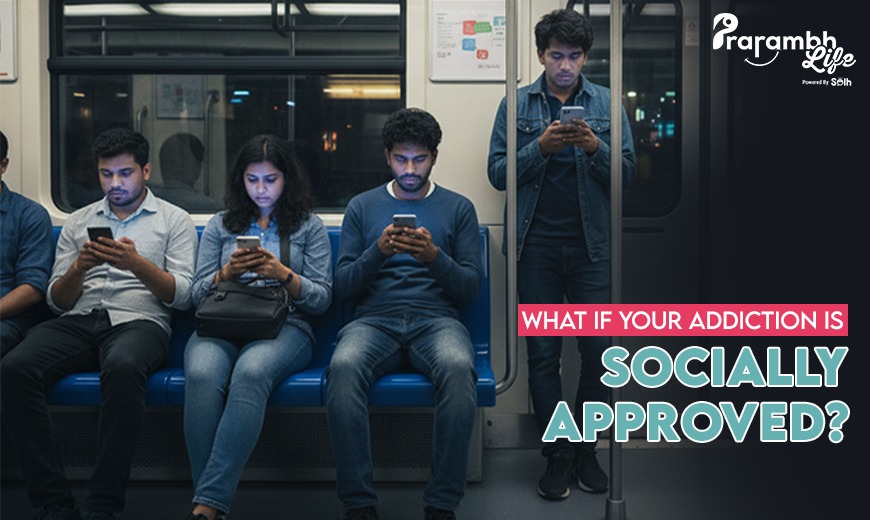
Not Drugs. Not Alcohol. Still Addiction.
Let’s say this clearly:
If you’re waiting for drugs or alcohol to enter the picture before taking de-addiction seriously, you’re already late.
Because addiction today has changed shape.
It lives in our phones.
Our work calendars.
Our shopping carts.
Our streaming apps.
Our search histories.
Our need to stay busy.
And the most dangerous part?
It looks normal.
The Addictions We Don’t Like to Name
No one warns you about:
- Phone addiction disguised as “being connected”
- Porn addiction hidden behind privacy and shame
- Work addiction praised as ambition
- Food addiction masked as comfort
- Shopping addiction framed as self-care
- Validation addiction disguised as confidence
- Work addiction praised as ambition
- Food addiction masked as comfort
- Shopping addiction framed as self-care
- Validation addiction disguised as confidence
These addictions don’t raise alarms.
They earn applause – or silence.
So people don’t seek help.
They adapt.
Why These Addictions Are Harder to Quit
Substances are external.
Behavioral addiction is embedded in daily life.
You can’t quit the internet.
You can’t stop needing food.
You can’t opt out of work.
So the addiction doesn’t live in the object -- it lives in the relationship with it.
That’s why quitting alone rarely works here.
Because the trigger is everywhere.
“But Everyone Does This” Is Not a Diagnosis
One of the most common reasons people dismiss their addiction is comparison.
“Everyone scrolls.”
“Everyone works late.”
“Everyone watches porn.”
“Everyone shops online.”
Yes.
But not everyone feels out of control doing it,
And for some people, that becomes social media addiction.
The real signal isn’t frequency.
It’s dependency.
Ask yourself:
Do I reach for this when I feel uncomfortable?
Does stopping make me anxious or restless?
Do I keep going even when I don’t enjoy it anymore?
That’s where addiction lives.
Addiction Is About Regulation, Not Pleasure
This might surprise you:
Most addictions aren’t about pleasure.
They’re about regulation.
They help you:
- Escape stress
- Avoid emotions
- Feel something -- or nothing
- Stay distracted from internal noise
When life feels overwhelming, addiction feels organised. Predictable. Reliable.
Until it isn’t.
Why Shame Keeps People Stuck
New-age addictions carry a different kind of shame.
People think:
“This is stupid.”
“Others have it worse.”
“I should be able to handle this.”
So they don’t talk.
They don’t seek support.
They normalize suffering.
But addiction doesn’t disappear when ignored.
It just grows quieter -- and stronger.
A New Way to Think About Recovery
Recovery today doesn’t have to be loud or dramatic.
It can be:
- Digital, with a practical digital detox approach
- Self-paced
- Private
- Guided
- Grounded in understanding stress, not fighting urges
It’s less about removing behaviour
and more about building capacity to handle life without it.
That’s where addiction recovery support becomes real.
One Honest Reflection
If you removed this behaviour from your life --
what feeling would you have to face instead?
That answer matters more than the addiction itself.
FAQs
1) What is de-addiction, and can it apply to phone or social media use?
Yes. De-addiction isn’t limited to drugs or alcohol, it also includes behavioural patterns like phone addiction and social media addiction when they feel compulsive.
2) How do I know if it’s an addiction or just a habit?
The key sign is loss of control. If stopping makes you anxious, restless, or you keep going even when you don’t enjoy it anymore, it’s more than a habit.
3) Why are behavioral addictions harder to quit than substances?
Because they’re built into daily life. You can’t fully avoid the internet, food, work, or shopping, so triggers are everywhere.
4) What role does shame play in addiction?
Shame keeps people silent and isolated. The more you hide it, the stronger and more normal the addiction starts to feel.
5) How does Prarambh Life help with de-addiction and behavioural addictions?
Prarambh Life supports de-addiction through guided, self-paced recovery that focuses on stress regulation, not willpower. It’s private, structured, and built for real life.


