

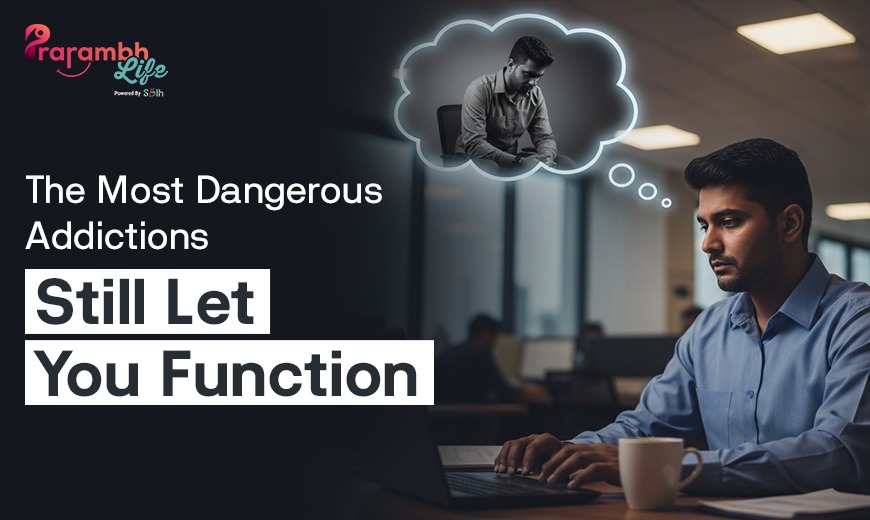
You don’t look addicted.
You wake up on time.
You reply to messages.
You show up at work.
You laugh at the right moments.
You’re “functioning.”
And that’s exactly why no one notices.
Because somewhere along the way, we decided that addiction only counts when life is visibly falling apart. When jobs are lost. When relationships explode. When someone looks unrecognisable.
But addiction that hides in routine doesn’t announce itself.
It blends in.
Most hidden or invisible addiction doesn’t arrive like a storm.
It arrives quietly.
It sits beside your daily routine and slowly takes more space than you realise.
The Problem With How We Imagine Addiction
When people hear the word addiction, they imagine extremes.
- Drugs
- Alcohol
- Rock bottom
So if you don’t match that picture, your mind automatically says:
“This can’t be addiction.”
But what if addiction today doesn’t always destroy lives?
What if it just runs them silently?
Scrolling every night until your eyes burn.
Ordering food even when you’re not hungry.
Working through exhaustion because stopping feels uncomfortable.
Watching porn not for pleasure—but for numbness.
Shopping when emotions feel messy.
Checking your phone the moment silence appears.
These are behavioral addiction most people don’t recognise as addiction.
This is how addiction that looks normal survives.
Addiction Doesn’t Always Break You. Sometimes It Holds You Together
Here’s the uncomfortable truth:
Most people don’t turn to addictive behaviours because they’re reckless.
They turn to them because something inside needs relief.
Relief from:
- Stress that never shuts off
- Loneliness that doesn’t announce itself
- Pressure to perform, cope, succeed
- Emotions that don’t feel safe to sit with
So the brain finds shortcuts.
A hit of distraction.
A moment of control.
A pause from feeling too much.
This is how functional or high-functioning addiction begins.
It works. At least at first.
That’s why addiction doesn’t feel like a problem in the beginning.
It feels like a coping mechanism.
The Loop Nobody Talks About
This is what addiction that hides in routine often looks like:
Trigger → discomfort → behaviour → temporary relief → guilt → repeat
No one sees the loop because it happens inside.
You don’t collapse.
You continue.
But the cost shows up slowly:
- You feel less present
- Joy feels muted
- You rely on something external to regulate emotions
- Stopping feels harder than starting
These are early signs of addiction most people ignore.
And still, you tell yourself:
“I’m fine. At least it’s not serious.”
Why Willpower Rarely Works
People often ask, “Why don’t I just stop?”
Because addiction isn’t a discipline issue.
It’s a nervous system issue.
When stress stays high for too long, the brain looks for fast relief.
Not healthy relief.
Fast relief.
That’s why digital addiction, phone addiction, and other routine-based behaviours become automatic.
So even when you know something isn’t helping anymore, your system reaches for it anyway—not because you’re weak, but because you’re wired for survival.
Shame doesn’t break this loop.
Awareness does.
What Recovery Can Look Like Today
Recovery doesn’t always mean rehab.
It doesn’t always mean detox.
It doesn’t always mean announcing anything to the world.
Sometimes recovery starts with:
- Noticing patterns instead of judging them
- Understanding what the behaviour is protecting you from
- Learning safer ways to calm your system
- Breaking loops gently, not violently
This is why online addiction recovery and digital de-addiction programs are helping people who don’t relate to traditional treatment models.
Modern recovery is quieter.
More private.
More personalised.
For many people, anonymous and confidential online rehab support is what finally makes change possible.
A Question Worth Sitting With
If no one ever labelled your behaviour as addiction—
If it never reached a “stage” that looked serious—
If it stayed hidden inside routine—
Would you still say it’s helping you live the life you want?
You don’t have to answer today.
But noticing is often the first step in any addiction recovery journey.
FAQs
1. What does “addiction that hides in routine” actually mean?
It refers to addictive patterns that don’t look extreme or destructive on the surface. You may be working, functioning, and meeting responsibilities—yet relying on certain behaviours daily to regulate stress, numb emotions, or avoid discomfort. Because these habits blend into routine, they often go unnoticed.
2. Can behavioural habits really become addiction?
Yes. Behavioral addiction types—like excessive phone use, compulsive scrolling, emotional shopping, or constant overworking—can activate the same reward and relief cycles in the brain as substance use. The difference is visibility, not impact.
3. How do I know if I’m addicted or just coping?
A helpful question isn’t “Is this bad?” but “Do I feel in control?”
If stopping feels uncomfortable, if the behaviour is your main way to manage stress, or if relief is always followed by guilt, these may be early signs of addiction, even if life looks “normal.”
4. Do I need rehab or detox for this kind of addiction?
Not always. Many people dealing with functional or high-functioning addiction don’t relate to traditional rehab models. For them, online addiction recovery, digital de-addiction programs, and confidential support focused on awareness, nervous system regulation, and behaviour change can be more appropriate and sustainable.
5. How can Prarambh Life help with addiction that hides in routine?
Prarambh Life is designed for people whose struggles don’t look obvious but still feel heavy. Its AI-enabled de-addiction program offers confidential, personalised, and structured online recovery support—especially for behavioural and digital addictions. It focuses on understanding patterns, reducing reliance on coping behaviours, and building healthier regulation without shame or exposure.


